

You’re rushing to a morning meeting, balancing a coffee in one hand and your keys in the other. As you approach your car, you notice streaks of salt down the doors and crumbs from yesterday’s rushed muffin or granola bar scattered across the passenger seat like confetti from a party you didn’t mean to host.
You think to yourself, “I really should get this taken care of… but who has the time? Do people really notice, and should I be embarrassed?”
It’s the kind of moment that makes you realize how helpful mobile interior detailing can be. It often boils down to a single question: how often should you detail your car? And the answer is not only about how your beautiful commuter looks: detailing protects the paint, preserves the interior, and keeps your car in good shape for longer.
How Often Should You Detail Your Car?
Car owners often hear conflicting advice: Dad says every few months, your ‘budget-conscious’ husband says once a year. The truth is that there’s no right answer. At Essential Auto Detailing, our recommendations are based on experience with local conditions and client needs. Regular detailing is an investment, and while the cost to detail a vehicle varies, it’s almost always less than repairing damage caused by neglect. Paying attention to your car’s detailing frequency helps prevent problems from piling up.
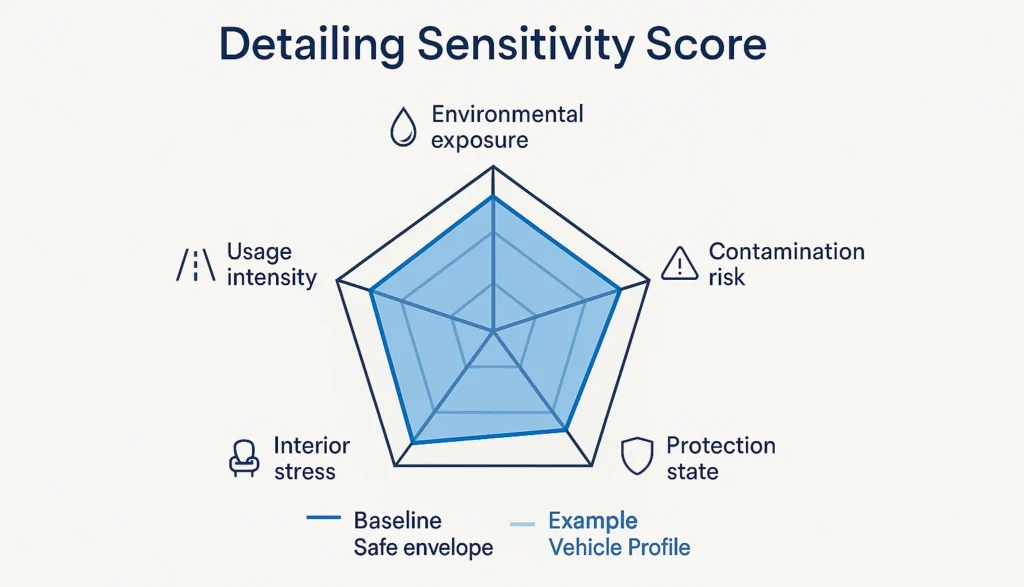
Factors That Determine Car Detailing Frequency
The answer to how often you should detail your car depends on several factors:
- Driving habits: Daily commuters expose their vehicles to more grime and wear than weekend drivers. Heavy city traffic often means more brake dust and air pollutants, while highway commutes bring rock chips and bug buildup.
- Local conditions: Southern Ontario roads are characterized by salt in winter, heavy rainfall in spring, and dust in summer. These factors all shorten the time between details.
- Vehicle type and age: Family SUVs tend to collect mess faster, while sports cars or classics require careful preservation and protection of their specialty finishes.
- Parking situation: Cars parked outdoors face more exposure to weather, tree sap, and bird poop, while garage-kept vehicles usually last longer between details.
Typical Detailing Schedules By Driver Type
- Busy professionals: Quarterly or semi-annual detailing keeps vehicles presentable and protected without adding to a packed schedule. The latte splash drying on the console, salt streaks racing down the doors, and a film of road dust that makes black paint look permanently grey. All of this makes the routine worthwhile and shows why the frequency of detailing your car is never a standard answer. For professionals balancing packed schedules, knowing the time it takes to detail a car helps plan a realistic routine.
- Parents and family drivers: Interior details should be cleaned every 2–3 months to help manage spills, crumbs, and odours. Stain and odour prevention is especially important with kids. And for families juggling car seats and snack runs, sticking to a regular interior detailing schedule makes life easier (and cleaner!).
- Auto enthusiasts: Regular detailing with ceramic coatings or seasonal touch-ups helps maintain finishes and prevent paint wear. Love your Dodge Viper? Enthusiasts often want their cars to look show-ready, and coatings extend the life of that finish.
- Commercial clients and fleets: Monthly or quarterly detailing ensures consistent presentation and protects vehicles that represent the business brand. Clean, well-kept vehicles also reinforce professionalism to customers.
Detailing Schedule At A Glance
Detailing schedule at a glance
| Driver type | Recommended frequency | Notes |
|---|---|---|
| Busy professionals | Every 3–6 months | Focus on presentation and quick interior refresh. |
| Parents / family drivers | Every 2–3 months | Interior deep cleans for spills, odours, safety. |
| Auto enthusiasts / premium | Every 1–3 months | Ceramic or wax protection; paint correction as needed. |
| Commercial fleets | Monthly or quarterly | Consistent, predictable presentation across vehicles. |
Seasonal Car Detailing Considerations In Ontario
Climate plays a major role in how often you should schedule detailing.
- Winter: Salt and slush can corrode undercarriages and damage paint. So, undercarriage rinses and protective coatings are key.
- Spring: Pollen, mud, and rain make interiors and exteriors harder to manage. A deep clean after winter also removes hidden salt and grime.
- Summer: Summer sun bakes dashboards until they crack, and a chalky dust layer coats your car after a highway trip. Extra protection, such as waxing or exterior car detailing, helps preserve finishes.
- Fall: Moisture and leaf buildup cause staining and hidden damage if not addressed. Pre-winter detailing creates a layer of defence before harsher months.
Local drivers booking car detailing in Niagara Falls and the broader GTA are aware of how quickly road salt can damage a finish. A Western University study found that nine different winter road salts caused measurable corrosion on six types of metals, proving that salt exposure breaks down the very structure beneath your paint. It’s one of the biggest reasons drivers in Ontario ask how often they should detail their car, especially during winter.
Diy Vs Professional Detailing
There are tasks you can do yourself, like vacuuming interiors or rinsing off visible dirt. But deep cleaning and protective treatments are best left to professionals. DIY methods can miss hidden grime, and that bargain sponge from the gas station? It’s more likely to carve in swirl marks than add the shine you’re looking for. A professional detail ensures every surface is cleaned properly and protected for the long term.
What Happens If You Wait Too Long To Detail Your Car?
Delaying detailing has real consequences. Road salt can embed in paint, interior stains can set, and odours become harder to remove. A quick DIY clean can provide short-term benefits, but for deeper protection, professional care is necessary. Neglecting regular detailing can lead to higher repair costs down the line.
Without regular care, hidden moisture and salt can trigger corrosion, making it harder to prevent rust from forming on your car.
Protective Services And Their Impact On Exterior Car Detailing
The products used on your vehicle affect how often detailing is required. A traditional wax may last a few months, while ceramic coatings can provide long-term protection, reducing the frequency of full detailing. Adjusting frequency based on protective choices ensures you get the most out of each service.
Professional Perspective: How Detailers Decide
When a professional inspects your vehicle, they don’t only look for dirt. They check the condition of your paint, the depth of existing protection, wear on interior materials, and even the state of trim and plastics. This assessment helps determine whether your vehicle requires a full detail, a quick refresh, or protective services to maintain its appearance.
Resale Value And Long-Term Benefits
Regular detailing keeps your car looking its best and helps you get more value when it’s time to sell or trade in. Vehicles with consistent detailing tend to perform better at trade-in or resale, often commanding higher offers.
Lease returns are another consideration: cars that come back in good condition avoid costly penalties. For many drivers, resale value is a significant factor in deciding how often to detail their car, as buyers notice the difference between a well-maintained and a neglected vehicle. Regular exterior and interior upkeep also reduces the time required to detail a car at resale. Less catch-up work, more lasting value.
Frequently Asked Detailing Questions
Is detailing worth it if I wash my car weekly?
Washing helps, but it doesn’t clean deep or add protective layers. Detailing does both.
What’s the difference between detailing and washing?
Washing removes surface dirt; detailing restores and protects every surface, inside and out.
Do ceramic coatings mean I can detail less often?
They extend protection, but regular maintenance is still required for interiors and exterior touch-ups.
Our Approach To Ongoing Care
We recommend starting with our mobile car detailing service as your foundation. From there, we offer tailored packages that fit your needs without unnecessary extras. For clients who want consistency without the stress of scheduling, our maintenance program provides care that keeps vehicles in top condition throughout the year.
For added protection, consider available options like exterior car polishing and paint correction. Detailing frequency becomes clearer when the plan is matched to your lifestyle and driving conditions.
Your Morning Commute, Upgraded
That same morning rush feels different when the car is well-maintained. The salt streaks aren’t there, the coffee stain isn’t waiting to be scrubbed out, and the decision isn’t hanging overhead anymore.
The detail is done, the routine is set, and the car simply feels ready. It’s polished, presentable, and no longer the guilty secret you hope clients or friends don’t notice when they hop in. It’s just one less thing to worry about on the way to what really matters, and a clear answer to how often YOU should detail your car.
Want to keep it pristine year-round?
Skip the hassle — get a detailing maintenance program across Welland & the Niagara region. We come to you.